Thursday, February 26, 2009

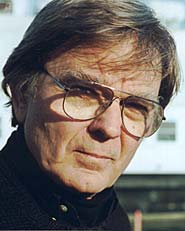
Coover Recordings Now on PennSound

Thanks to the quick work of Mark Lindsay and Jenny Lesser, Robert Coover's reading and discussion have now been segmented and added to their own PennSound author page. If you missed the live webcasts, you can follow this link to to listen or watch.

Remember, I'll be giving extra credit points for thoughtful comments on either the original thread or this one. My flight gets into Boston at 6:30 tomorrow night, so let's set that as a deadline for posting. For now, however, Donald Barthelme's our main focus, and I'll look forward to discussing more stories from Sixty Stories tomorrow.

Wednesday, February 25, 2009

MLA Guidelines: A Brief Primer

The short and sweet version of MLA goes as follows: in-text parenthetical citations which indicate page number, and author/text (if necessary), with a "Works Cited" list at the end. No footnotes, no endnotes, no bibliography. Whenever you borrow ideas from another source, that source should be given credit by citing it. Failure to do so is plagiarism. We'll spend a few minutes discussing the basics of MLA today in class, but I wanted to give you a few resources for when you write your papers:

Please consult with these sites, and be sure that both your in-text citations and "Works Cited" list are properly formatted. Also please use the formal MLA header, and put your name and page number in the header on each page.

Update: Final Essay Questions

Here are seven potential paper topics for your final essays, which are due in class on the last day of the quarter (3/13). Your essays should be 5-7 pages in length (though feel free to go longer), double-spaced, printed in a serif font (Times New Roman, most likely) and stapled. Papers should also be written in MLA format, complete with a "works cited" page (I'll provide links for those of you who aren't familiar with MLA conventions); those which do not follow the format will be docked points. Please, please, please be sure to back up your ideas with sufficient evidence from the texts (and please cite this evidence properly). Also note that "5-7 pages" means that, at minimum, your essay makes it all the way to the bottom of the 5th page, and ideally onto a 6th page (and that doesn't count your "works cited" page). Works which do not meet the minimum length requirements will automatically receive an F.


Within the next day or so, I'll probably add one or two more topics, so if none of these strikes your fancy keep an eye out for (or suggest) an alternate topic.


1. In Richard Brautigan’s Trout Fishing in America, and Robert Coover’s The Universal Baseball Association, Inc., J. Henry Waugh, Prop., an abstract idea—trout fishing and baseball, respectively—becomes a frame through which the author is able to depict a broad array of human (and distinctly American) experiences. Explore the various permutations of these ideas, citing and analyzing concrete examples from each book, and draw some general conclusions about what makes each idea malleable enough that it can serve so many different situations. Conclude by making some general comparisons between the two novels.


2. Compare the use of song as an intertextual device by Vonnegut (Bokonon’s calypsos in Cat’s Cradle), Coover (Sandy Shaw’s baseball ballads in The Universal Baseball Association…) and Donald Barthelme (in the stories “City Life,” “An Abduction from the Seraglio” and “How I Write My Songs”). What purpose do these lyrics serve within each text, both within the narrative itself, and as a meta-narrative device? What comparisons can you make between each author’s use of this technique, and what’s the overall effect on you as a reader? Can you offer any thoughts as to why the authors might have chosen to include song in their works?


3. Having read a short story collection and a novel each by Robert Coover and Donald Barthelme, what conclusions can you make about each author’s approach to short and long-form works (for example, how they sustain a narrative, what conceptual or structuring techniques they employ, etc.), citing similarities and differences. Likewise, what comparisons can you make between Coover and Barthelme’s idiosyncratic style of fiction?


4. Explore the role of uncertainty in several (at least three) of the texts we’ve read this quarter—particularly in regards to endings, or a general confusion as to how the stories’ events unfold. What comparisons can you make between the ways in which each author treats this unknowingness? How many different postmodern characteristics are present in each of these texts? What’s the overall effect of this nebulousness on you as a reader? Ultimately, does it matter whether the conclusion is clear or not, or do the means supersede the ends in these works of fiction?


5. Examine the depiction of sex and sexuality in several (at least three) of the texts we’ve read this quarter. How does it fit into the overall narrative of each text: is it a gratuitous and lurid attempt to spice up the story, or does it serve a more integral function, furthering ideas central to the plot or characterization? Are there any ways in which the author’s use of sex is emblematic of postmodernism? How might this sort of visceral content relate to the era in which these texts were written?


6. Though all of the authors we’ve looked at this quarter have been male, women play important parts in all of their works, serving in a wide variety of roles. Analyze the gender dynamics present in several (at least three) of the texts, discussing the ways in which women are depicted and demonstrating the full spectrum of female characterization. Does any one author emerge as particularly sensitive to the opposite sex? Does anyone seem excessively misogynistic? (Thanks Camellia for suggesting this question!)


7. All of the works we’ve read this quarter (with the exception of The Dead Father and about half of Barthelme’s stories) were written during the 1960s, a period of tremendous social tumult in America. Explore the generation gap — marked by tensions between the establishment and counterculture, repression and freedom, the pursuit of business versus pleasure, changing values and ideals, etc. — as it’s portrayed in several (at least three) texts from our reading list. Which characters represent a youthful vitality, and what forces do they struggle against? What choices and narrative details are evidence of a new philosophy coming to the forefront?

Monday, February 23, 2009

Weeks 8, 9 and 10: Donald Barthelme

Week 8 — from Sixty Stories
  • Wednesday, February 25th: from Come Back, Dr. Caligari (1964): Me and Miss Mandible (17); from Unspeakable Practices, Unnatural Acts (1968): The Balloon (46), The President (52), Game (56), Alice (61), Report (78), Robert Kennedy Saved from Drowning (68), See the Moon? (90); from City Life (1970): Views of My Father Weeping (109), Paraguay (120)
  • Friday, February 27th: from City Life (1970): City Life (137), The Falling Dog (163), The Policemen's Ball (169), The Glass Mountain (172); from Sadness (1972): Critique de la Vie Quotidienne (177), The Rise of Capitalism (198), A City of Churches (203), Daumier (208), The Party (225); from Guilty Pleasures (1974): Eugenie Grandet (230)


Week 9 — The Dead Father:
  • Monday, March 2nd: Introduction by Donald Antrim (vii-x), plus Chapters 1-12 (3-83)
  • Wednesday, March 4th: Chapters 13-17, plus "A Manual for Sons" (84-146)
  • Friday, March 6th: Chapters 18-23 (147-177)


Week 10 — from Sixty Stories
  • Monday, March 9th:from Amateurs (1976): At the End of the Mechanical Age (267), Rebecca (275), The Captured Woman (280), I Bought a Little City (290), The Sergeant (297), The School (304), The Great Hug (308), Our Work and Why We Do It (312); from Great Days (1979): The New Music (332), The Zombies (345)
  • Wednesday, March 11th: from Great Days (1979): The King of Jazz (349), The Abduction from the Seraglio (363), On the Steps of the Conservatory (367), The Leap (374); previously unpublished stories: How I Write My Songs (413), The Farewell (419), Thailand (428), Heroes (432), Bishop (438), Grandmother's House (444)

On Friday the 13th (oh, fated day . . .) your final essays are due, and we'll wrap up our work this quarter by discussing your overall experience of postmodernism through the work of Brautigan, Vonnegut, Coover and Barthelme.

Coover's Kelly Writers House Fellows Events

Please remember that Robert Coover will be taking part in two events which will be broadcast live over the web tonight and tomorrow morning:
You can (and should) tune in to these events through the KWH-TV website (follow the first link for "view live video") — the live feed should start shortly before the events themselves (so if you pull it up now, you'll get an error message). There are some troubleshooting tips further down the page itself, however as long as your browser and Quicktime are updated and working, it should play for you without any troubles. For more general information about Coover's visit, please check out the Kelly Writers House Fellows Coover homepage.

Please use this thread to comment on the reading, and especially Coover's answers during the Q&A session. I'll be giving extra credit for particularly thoughtful responses.

Wednesday, February 18, 2009

Some Coover Links

To start, here's the Kelly Writers House Fellows page on Coover, assembled in preparation for his visit next week to UPenn's campus. You'll have the opportunity to tune in to a live webcast of his reading Monday evening, as well as his conversation with Al Filreis (director of Penn's Center for Programs in Contemporary Writing) on Tuesday morning:

Here are the original New York Times reviews for the two books we're reading (hold off on reading the second one until you've finished the novel):
Here's what ostensibly passes for a book review — of Bartlett's Familiar Quotations, of all things — in which Coover, working in a very Coover-like manner, creates an imaginative work of metafiction by sampling liberally from that famous collection's aphorisms:
Coover is also well-known as a proponent of hyperfiction — a computer-aided form of literature, once housed on CD-ROMs, and now drafted in HTML or XML, which, like a Choose-Your-Own-Adventure novel, allows readers to take more control over their reading experience. There's still some interesting work being produced in this area (a few links below), but admittedly, a lot of the material seems very thin and clunky to contemporary eyes. Coover spelled out some of the implications of this genre in a pair of articles, also in the Times, in 1992 and 1993:
Coover is also a founder and head of the Electronic Literature Foundation, a group "founded in 1999 to foster and promote the reading, writing, teaching, and understanding of literature as it develops and persists in a changing digital environment." You can read some electronic texts by visiting the Electronic Literature Directory. Also, here are a pair of PennSound pages which showcase discussions of electronic literature, complete with links to example texts. Stefans (who studied with Coover at Brown) talks more about the future potential for computer-aided poetics, while Funkhouser gives a wonderful overview of the history of computer-writing:
Following this link will take you to Al Filreis' blog entry on "The Cave," a virtual-reality literary environment Coover helped create at the University of Iowa. You can even see a brief video recreation of what it's like to experience "The Cave." Finally, here are a few more videos featuring Coover:


a trailer for the film adaptation of "The Babysitter," which gives you some idea of just how bad it is


A History of the Future of Narrative: Robert Coover from Scott Rettberg on Vimeo.


Monday, February 9, 2009

Robert Coover Readings (Weeks 6, 7 and into 8)

Now that the midterm's behind us, we can move on to our unit on Robert Coover, the sole living member of our quartet of postmodern authors this quarter (so alive, in fact, that we'll be taking part in a Q&A with him in a few weeks). I'll post more background info on Coover shortly, but for now, here's the reading schedule for the next six classes:


Week 6
  • Wednesday, Feb. 11: Pricksongs and Descants: "The Door: a Prologue of Sorts," "The Magic Poker," "Morris in Chains" and "The Gingerbread House"
  • Friday, Feb. 13: Pricksongs and Descants: "Seven Exemplary Fictions," "The Elevator"


Week 7
  • Monday, Feb. 16: Pricksongs and Descants: "Romance of the Thin Man and the Fat Lady," "Quenby and Ola, Swede and Carl," "A Pedestrian Accident," "The Babysitter"
  • Wednesday, Feb. 18: The Universal Baseball Association . . .: Chapters 1 & 2
  • Friday, Feb. 20: The Universal Baseball Association . . .: Chapters 3 & 4


Week 8
  • Monday, Feb. 23: The Universal Baseball Association . . .: Chapters 5 - 8